04 Feb New publication on the discovery of Radiolaria in the ocean
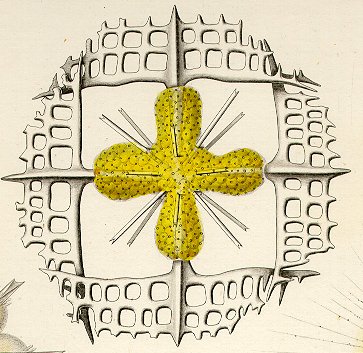
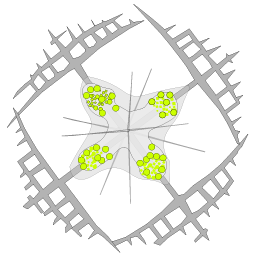
We are happy to share a new article exploring the discovery and early study of Radiolaria—planktonic protists that fascinated 19th-century naturalists and marine biologists.
Through the lives and work of Ehrenberg, T. H. Huxley, Johannes Müller, and Ernst Haeckel, the articles traces how Radiolaria were studied across Europe, at sites that were not only sampling places but also sources of romantic and artistic inspiration. Their research was deeply influenced by major thinkers such as Goethe and Alexander von Humboldt, blurring the boundaries between science, philosophy, and art.
Pioneering work on Radiolaria played a central role in shaping several emerging concepts (e.g., cell theory, individuality) and fields (e.g., taxonomy, evolution of morphology, symbiosis). The historical legacy of Radiolaria highlights the enduring importance of sampling and close observation of planktonic cells in the ocean.
Published in the Journal of Eukaryotic Microbiology
https://lnkd.in/dTRw9np2